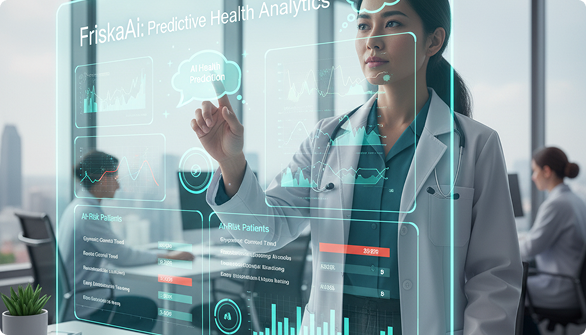

As digital transformation reshapes modern medicine, predictive health analytics is emerging as a vital tool in clinical decision-making. Designed to leverage vast datasets and machine learning algorithms, predictive analytics enables healthcare providers to anticipate disease progression, optimize interventions, and personalize patient care. For physicians navigating value-based care, risk stratification, and outcome-driven models, understanding the role and application of predictive analytics is no longer optional—it’s essential.
Understanding Predictive Health Analytics
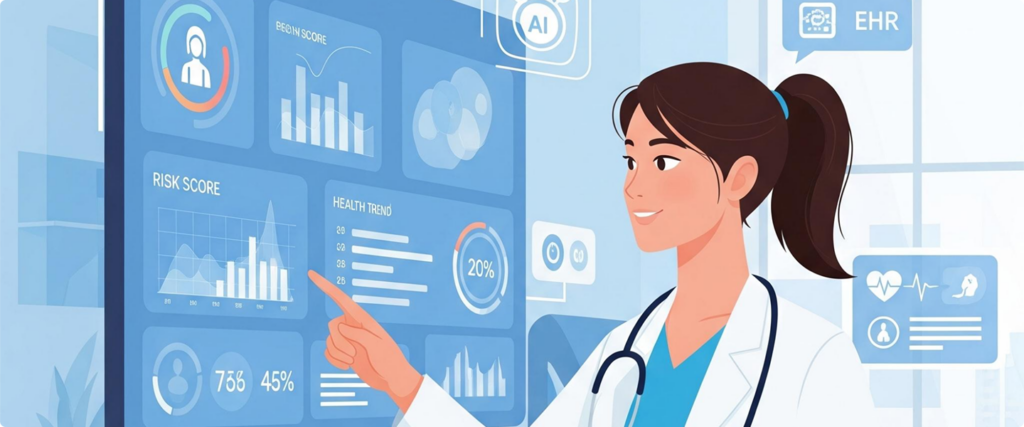
Predictive health analytics refers to the use of historical and real-time data to forecast future health outcomes. This approach combines clinical data (such as lab results and electronic health records) with behavioral, social, and environmental factors to generate risk scores, identify trends, and guide proactive care planning.
These systems are powered by AI and statistical models that can detect subtle patterns often missed by traditional methods. Whether predicting hospital readmissions, assessing chronic disease risk, or identifying mental health vulnerabilities, predictive analytics enhances physicians’ ability to make timely, informed decisions.
Key Use Cases in Clinical Practice
Risk Stratification: Predictive tools can categorize patients based on their likelihood of developing complications. For example, a primary care physician managing a panel of diabetic patients can prioritize high-risk individuals for more intensive monitoring and follow-up.
Early Detection of Deterioration: In emergency or inpatient settings, predictive models can flag early warning signs of conditions such as sepsis or cardiac arrest hours before clinical symptoms become evident—buying precious time for intervention.
Chronic Disease Management: Predictive analytics supports long-term care by analyzing adherence patterns, comorbidities, and social determinants. This enables personalized action plans for conditions like COPD, hypertension, and heart failure.
Population Health Insights: For practices or health systems, aggregated predictive models provide insights into population-level risks, enabling targeted programs for prevention and education.
Integration with Existing Workflows
Modern predictive tools are increasingly designed to integrate seamlessly into existing EHR systems and clinical workflows. Alerts and recommendations are embedded within the physician’s workflow, minimizing disruption while maximizing utility. For example, FriskaAi’s platform can alert clinicians when a patient is trending toward poor outcomes based on lifestyle data, biometric inputs, or medication adherence patterns—prompting earlier, more tailored interventions.
Ensuring Clinical Validity and Trust
While the promise of predictive analytics is immense, clinicians must remain critical about the models they adopt. Key considerations include:
- Data Quality: The accuracy of predictions depends on the completeness and relevance of the input data.
- Explainability: Physicians should understand how a model reaches its conclusion. Black-box algorithms may be less acceptable in clinical settings where justification is essential.
- Regulatory Oversight: Some predictive algorithms may be classified as medical devices and require FDA clearance or CE marking.
Doctors should collaborate with data scientists or health IT teams to evaluate model performance and relevance to their patient population.
Ethical Considerations and Bias
Predictive models can unintentionally perpetuate biases present in historical data. For instance, underrepresented populations may receive less accurate predictions if the training data lacks diversity. Physicians must be vigilant about these risks and advocate for fairness and equity in algorithm design and deployment. Transparent validation and periodic auditing of models help ensure ethical implementation.
Privacy and Data Security
Predictive analytics platforms, especially those processing patient-level data, must comply with data protection regulations such as HIPAA. FriskaAi stores patient data securely on Microsoft Azure with robust encryption protocols and full HIPAA compliance—ensuring that sensitive health information remains confidential, even when integrated with predictive tools for reimbursement or population health use.
Economic and Operational Benefits
For healthcare practices, predictive analytics not only improves clinical outcomes but also enhances operational efficiency. By identifying high-risk patients early, clinics can reduce costly emergency visits, shorten hospital stays, and avoid penalties associated with poor outcomes under value-based payment models. Some practices have reported up to a 25% reduction in preventable hospitalizations and a 15% improvement in care coordination metrics when predictive insights are embedded in routine care.
Physicians can also use predictive tools to align with payer requirements, support documentation for insurance reimbursement, and demonstrate compliance with quality benchmarks.
Empowering the Future of Care
As predictive analytics becomes more refined, its role in precision medicine, public health strategy, and patient empowerment will continue to grow. Doctors who embrace these tools gain a strategic advantage in delivering anticipatory, data-informed care. Whether practicing in a solo clinic or a large health system, understanding and harnessing predictive analytics is key to thriving in the evolving healthcare ecosystem.
For clinicians exploring the integration of AI-driven tools like FriskaAi, predictive analytics represents both a clinical asset and a strategic investment in the future of patient-centered care.