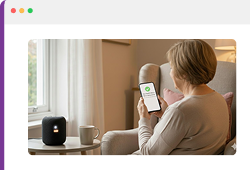

Imagine a small, easy-to-wear sensor you use at home that measures blood pressure, heart rhythm, oxygen levels, temperature and—where appropriate—glucose trends, then sends that data securely to your care team. That’s the promise vendors and researchers are chasing: simpler at-home monitoring for people with chronic conditions, and cleaner workflows for their physicians.
I dug into regulatory guidance, peer-reviewed studies and recent device actions so nothing below is an opinion floating in the breeze — it’s grounded in public sources. Here’s what’s provable today, what’s coming, and what patients and clinicians should watch for.

The short, evidence-backed answer
Single-device, multi-parameter monitoring is already possible in specific, FDA-cleared products (continuous ECG/patches, multiparameter wearables, and connected blood-pressure/SpO₂ platforms). But no single consumer device today reliably replaces the full set of condition-specific tests (for example — fingerstick blood glucose or prescription CGMs for insulin dosing). Adoption depends on intended use, FDA clearance, payer rules, and clinical workflows.
Why this matters for US chronic disease care
- Remote Patient Monitoring (RPM) is reimbursable when it meets program criteria — CMS requires that devices meet the FDA’s definition of a medical device, automatically upload data, and be used frequently enough to qualify. That makes multi-parameter, connected devices especially attractive for clinics trying to sustain RPM programs.
- Patients want simpler experiences. People managing diabetes, heart failure, COPD and hypertension report better adherence when monitoring fits into daily life; combining measurements into fewer devices reduces complexity. Peer-reviewed work and reviews of wearable systems document this direction.
What “one device” can actually do today (concrete examples)
- Continuous cardiac/physiologic patches: FDA-cleared adhesive patches already collect continuous ECG and other physiologic signals for days and transmit them to clinicians (useful for arrhythmia detection and continuous telemetry outside the hospital).
- Multiparameter wearable monitors: Research prototypes and commercial platforms can measure ECG, SpO₂, skin temp, activity and provide spot-check BP or estimate trends when combined with algorithms. These are increasingly the subject of clinical validation studies.
- Condition-specific devices remain essential: Continuous glucose monitors (CGMs) are a different category — they sample interstitial glucose continuously and are clinically validated for diabetes management; CGMs and dedicated BP cuffs still play non-replaceable roles today.
Risks and real-world caveats (what physicians & patients must remember)
- Regulatory scope matters. FDA clears devices for specific measurements and intended uses; a product cleared to measure heart rate doesn’t automatically get cleared for insulin dosing decisions or replacing a lab test. Always check the device’s clearance/label.
- Quality and safety incidents happen. Example: the FDA and news reports have recently flagged problems with certain glucose sensor lots — showing that vigilance, recalls, and field safety notices are part of the landscape. Patients and clinicians should follow manufacturer & FDA safety communications.
- Interoperability & workflows are the hidden work. Data are only useful if they’re clinically meaningful, accessible in the EHR, and integrated into care team workflows — otherwise “more data” becomes noise. Peer reviews of RPM sustainability highlight this point.
How to evaluate a “one device” product for chronic care programs (practical checklist)
- Regulatory status: Is the device FDA-cleared for the exact measurements and clinical use you need? (Check FDA device listings.)
- Clinical validation: Are there peer-reviewed studies or clinical trials showing accuracy versus gold-standard tests?
- Reimbursement fit: Does the device meet CMS RPM requirements (connected, uploads automatically, used regularly) so your practice can bill appropriately?
- Safety track record: Any recent recalls, safety notices, or adverse-event reporting? (Search FDA and credible news sources.)
- Integration & patient experience: How does data flow into the clinician workflow and how easy is the device for patients to use daily? (Vendor demos + small pilot studies are useful here.)
The near future: convergence, not instant replacement
Market and regulatory trends show convergence: better sensors, more validated algorithms, and clearer reimbursement pathways are expanding what a single device can plausibly monitor. Companies that make specialized clinical devices (for example, CGM leaders and multiparameter RPM vendors) are expanding functionality and market reach — but the medical community still treats many measurements as distinct clinical modalities with their own validation needs.
Bottom line for patients and physicians
- For patients: a single, simple device that reduces daily friction is promising — but don’t assume it replaces condition-specific devices (like prescription CGMs or diagnostic ECG tests) unless your clinician confirms it. Check device clearances, safety notices, and ask how the data will be used in your care.
- For physicians & clinic leaders: multi-parameter devices can make RPM programs more scalable — but only if the device is validated for the intended clinical decisions, integrates into workflows, and aligns with payer rules (especially CMS). Start with pilots, track outcomes, and follow FDA/CDC/CMS guidance.