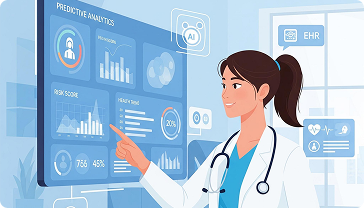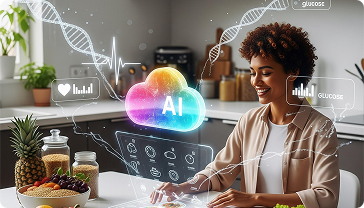

Nutrition science is rapidly evolving — and artificial intelligence (AI) is becoming one of the most researched tools for improving how we understand and personalize dietary advice. Rather than a buzzword, AI in nutrition represents a scientifically active area of research that seeks to move beyond one-size-fits-all dietary guidance toward more tailored, data-informed strategies.

Why Personalization Matters
Conventional dietary recommendations typically rely on broad population averages and generalized guidelines. While these can offer useful baseline advice, they often fail to account for individual differences in metabolism, lifestyle, genetics, and health conditions. This is one reason why personalized nutrition — nutrition tailored to the unique characteristics of an individual — is an important emerging field in dietetics and metabolic health research.
The growing field of personalized nutrition has been widely discussed in peer-reviewed research, highlighting how individual metabolic variability can significantly influence dietary responses.
AI plays a key role in enabling this personalization by integrating and interpreting complex, multi-dimensional health data in ways that are difficult for humans to accomplish manually.
How AI Enhances Nutrition Research
Artificial intelligence doesn’t replace nutrition science — it augments it. Researchers and developers use AI techniques such as machine learning, multimodal data integration, and predictive modeling to analyze large and diverse datasets. These may include biochemical markers, genetic information, lifestyle and dietary patterns, and sensor data from wearables.
Here are some scientifically documented ways AI is being applied:
AI systems have been shown to improve the accuracy of dietary tracking by combining wearable sensor data, image recognition, and pattern analysis, making it possible to roughly estimate nutrient intake more accurately than some traditional self-reported methods.
Enhanced Precision and Tailored Recommendations
AI frameworks can integrate data from diverse sources to create dietary suggestions that are more tailored to individual physiology and health markers. This ranges from metabolic profiles to activity patterns.
mdpi.com
Real-Time Monitoring and Feedback
Some systems use data from wearable devices (such as continuous glucose monitors and heart rate sensors) to inform dietary analysis and suggest adjustments based on real-time biological responses.
What Research Shows About Health Outcomes
Systematic reviews of AI applications in personalized dietary recommendations report that:
AI-generated nutrition interventions can improve metabolic health markers, such as blood-glucose control and digestive symptom severity, compared with traditional advice.
Some controlled studies found statistically significant improvements in clinical outcomes (e.g., symptom reductions in chronic conditions) when AI tools were used to tailor recommendations.
However, it’s important to note that long-term clinical validation and broad population studies are still emerging. Researchers consistently call for larger trials, standardized validation methods, and more diverse datasets before definitive clinical claims can be made.
Cambridge University Press & Assessment
Practical Strengths of AI in Nutrition
1. Data Integration
AI systems are highly effective at integrating large amounts of heterogeneous data — from digital food logs and wearable sensors to metabolic markers — which can provide a more nuanced understanding of nutrition’s impact on health than traditional tools alone.
Machine learning models are particularly effective at identifying complex, multi-variable patterns that traditional statistical methods may overlook.
2. Improved Dietary Tracking
Traditional dietary self-reporting methods are known to be prone to recall bias and underreporting, which has been documented extensively in nutrition science literature.
Artificial intelligence algorithms have shown improved performance in estimating nutrient intake and identifying eating patterns compared to manual methods prone to human error.
3. Support for Clinicians and Researchers
AI does not replace dietitians or clinicians; rather, it offers them advanced analytical support by highlighting patterns and insights that may otherwise be difficult to detect in large datasets.
Limitations and Challenges
While the promise of AI in nutrition is strong, scientific literature highlights several important limitations:
Algorithm Transparency and Interpretability
Many AI models act as “black boxes,” making it difficult for clinicians to fully understand how certain recommendations are generated. Research emphasizes the need for explainable AI to improve trust and reliability.
Data Quality and Bias
AI systems are only as good as the data they are trained on. Limited or biased datasets can lead to inaccurate or inequitable recommendations. Good research practice requires diverse, high-quality data to ensure generalizable results.
Ethical and Practical Considerations
Questions around data privacy, ethical use, and clinical governance remain active areas of discussion among scientists working on AI nutrition applications.
A Balanced View
The scientific consensus is that AI offers significant potential to improve the personalization and precision of nutrition science — particularly in research settings and advanced clinical contexts — but it is not a silver bullet. Current evidence supports its role as a tool to enhance human expertise and dietary research rather than replace traditional nutrition professionals.
What This Means for You
If you’re curious about how AI could support personalized nutrition:
AI is grounded in active scientific research, not just hype.
Evidence shows improved data integration and more tailored recommendations.
Long-term clinical outcomes and widespread clinical adoption are still evolving.
AI is best used alongside professional nutrition guidance and validated health data.
Conclusion: From Research to Practical Application
Artificial intelligence in nutrition is no longer a theoretical concept confined to academic journals. It is an evolving, research-supported tool that enhances how complex health data can be interpreted and translated into personalized dietary insights.
Current evidence demonstrates that AI can:
- Integrate multi-dimensional health data more efficiently than traditional methods
- Support precision-based nutrition strategies
- Improve dietary assessment accuracy
- Assist clinicians and researchers in identifying patterns not easily detectable through manual analysis
While continued large-scale validation studies are essential, the scientific direction is clear: data-driven personalization represents the future of nutritional science.
For healthcare professionals, researchers, and forward-thinking health organizations, exploring AI-supported nutrition systems offers an opportunity to:
Enhance analytical capability
Improve personalization at scale
Strengthen data-informed decision making
Bridge the gap between research and applied practice
The question is no longer whether AI will influence nutrition science — it is how effectively it can be implemented in real-world settings.
Experience Data-Driven Nutrition in Practice
If you would like to understand how an AI-supported nutrition platform functions in a real-world clinical or research environment, we invite you to explore it firsthand.
Book a Demo to see how advanced data integration, personalized analytics, and evidence-aligned methodologies can support modern nutrition practice.